
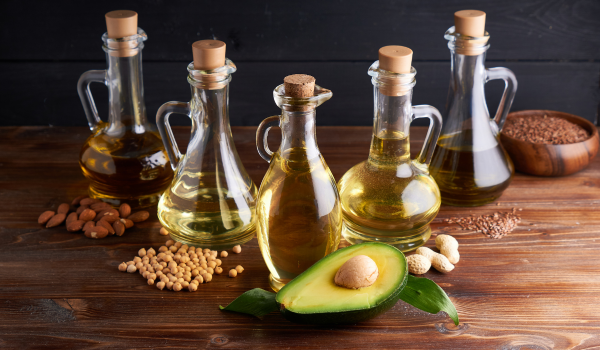
The type of cooking oil you use can influence cholesterol levels and overall heart health. Oils rich in monounsaturated and polyunsaturated fats are generally better choices because replacing saturated fats with these unsaturated fats may help lower LDL (“bad”) cholesterol.
Olive, avocado, canola, soybean, and walnut oils are among the options that can fit into a heart-healthy diet. The best choice also depends on how you plan to use the oil, since different oils tolerate different cooking temperatures.
1. Extra-Virgin Olive Oil
Extra-virgin olive oil (EVOO) is one of the most widely recommended oils for cardiovascular health.
It is particularly rich in monounsaturated fat, which can help lower LDL cholesterol when it replaces saturated fat in the diet. EVOO also contains polyphenols—plant compounds with antioxidant and anti-inflammatory properties that may help protect blood vessels.
Despite the common belief that extra-virgin olive oil should only be used cold, it can handle many everyday cooking methods. Its smoke point generally falls around 350–410 degrees Fahrenheit, depending on quality and processing.
Best Uses
- Salad dressings
- Sautéing vegetables
- Drizzling over cooked foods
- Marinades
- Moderate-heat grilling and roasting
For people looking for one versatile oil to use regularly, extra-virgin olive oil is a strong choice.
2. Avocado Oil
Avocado oil is another excellent source of monounsaturated fats.
Replacing foods high in saturated fat with unsaturated-fat sources such as avocado oil may support healthier LDL cholesterol levels.
One major advantage of avocado oil is its ability to tolerate high temperatures. Refined avocado oil can have a smoke point of approximately 500 degrees Fahrenheit or higher, making it particularly useful for high-heat cooking.
It also has a relatively mild flavor that works with many different foods.
Best Uses
- Roasting vegetables
- Sautéing
- Grilling
- High-heat cooking
- Marinades
Avocado oil can be especially useful when you want the heart-health advantages of unsaturated fat but need an oil suitable for higher cooking temperatures.
3. Canola Oil
Canola oil is inexpensive, versatile, and relatively low in saturated fat.
It contains both monounsaturated and polyunsaturated fats, including alpha-linolenic acid (ALA), a plant-based omega-3 fatty acid.
Replacing saturated fats with unsaturated vegetable oils such as canola oil may help lower LDL cholesterol and support cardiovascular health.
Because canola oil has a neutral taste, it can easily be incorporated into everyday cooking without significantly changing the flavor of a dish.
Best Uses
- Baking
- Sautéing
- Stir-frying
- Marinades
- Everyday cooking
Canola oil can therefore be a practical option for people who want an affordable, multipurpose cooking oil.
4. Soybean Oil
Soybean oil is another widely available source of polyunsaturated fat.
One nutritional advantage is its alpha-linolenic acid content. ALA is an essential omega-3 fatty acid, meaning the body cannot make it and must obtain it through food.
The body can convert a small amount of ALA into the longer-chain omega-3 fatty acids EPA and DHA.
Soybean oil is also widely available and relatively inexpensive compared with some specialty oils.
Best Uses
- Stir-frying
- Baking
- Sautéing
- Marinades
- Everyday cooking
As with other oils, soybean oil is most beneficial when it replaces sources of saturated fat rather than simply being added to an already high-calorie diet.
5. Walnut Oil
Walnut oil stands out because it is another useful plant source of ALA omega-3 fatty acids.
These unsaturated fats can support cardiovascular health when incorporated into an overall nutritious eating pattern.
However, walnut oil is more delicate than oils such as avocado or canola oil.
It can oxidize more easily when exposed to high temperatures, so it is generally better suited to cold dishes or low-temperature applications.
Best Uses
- Salad dressings
- Dips
- Drizzling over vegetables
- Adding to grain bowls
- Finishing soups and other dishes
Walnut oil also has a distinctive nutty flavor, so a relatively small amount can add significant flavor.
How Cooking Oils Affect Cholesterol
Dietary fat is not automatically unhealthy. The type of fat you consume is particularly important.
Cooking oils contain different proportions of saturated, monounsaturated, and polyunsaturated fats.
Monounsaturated Fats
Foods rich in monounsaturated fat may help reduce LDL cholesterol when they replace saturated fats.
Common sources include:
- Olive oil
- Avocado oil
- Canola oil
- Nuts
- Avocados
Polyunsaturated Fats
Polyunsaturated fats include omega-3 and omega-6 fatty acids.
Replacing saturated fat with polyunsaturated fat can help reduce LDL cholesterol and cardiovascular disease risk.
Saturated Fats
Eating large amounts of saturated fat can increase LDL cholesterol in many people.
Major sources include:
- Butter
- Coconut oil
- Palm oil
- Fatty meats
- Full-fat dairy products
Rather than eliminating all dietary fat, the goal is generally to replace some saturated fats with unsaturated fats.
Which Oils Should You Limit?
Some cooking fats contain substantially more saturated fat than others.
If you're managing high cholesterol or trying to support cardiovascular health, consider limiting frequent use of:
- Coconut oil
- Palm oil
- Butter
- Beef tallow
- Other animal fats
Partially hydrogenated oils are another category to avoid because they can contain artificial trans fats.
Trans fats are particularly problematic because they can increase LDL cholesterol while decreasing HDL (“good”) cholesterol.
Is Coconut Oil Healthy?
Coconut oil is often marketed as a healthy alternative to traditional cooking oils, but its nutritional profile is very different from olive, avocado, or canola oil.
Coconut oil is exceptionally high in saturated fat.
One tablespoon can contain roughly 11 grams of saturated fat, meaning a relatively small serving can account for a substantial portion of a person's recommended daily saturated-fat intake.
This doesn't mean coconut oil must never be consumed.
However, people concerned about LDL cholesterol should generally use oils rich in unsaturated fats more frequently and treat coconut oil as an occasional ingredient rather than their primary cooking oil.
Pay Attention To Smoke Points
The smoke point is approximately the temperature at which an oil begins producing visible smoke and starts breaking down more rapidly.
Different oils tolerate different temperatures.
Higher-Heat Options
For roasting, grilling, or other high-temperature cooking, options may include:
- Avocado oil
- Refined olive oil
- Canola oil
Moderate-Heat Options
For everyday stovetop cooking, consider:
- Extra-virgin olive oil
- Canola oil
- Soybean oil
Cold Or Low-Heat Options
More delicate oils are often better for finishing foods rather than frying.
Examples include:
- Walnut oil
- Flaxseed oil
- Some unrefined nut and seed oils
Matching the oil to your cooking method can help preserve flavor and quality.
Avoid Overheating Your Oil
Even a heart-healthy oil should not repeatedly be heated until it smokes.
Excessive heat can cause oils to oxidize and break down, potentially producing undesirable compounds while changing the flavor and nutritional quality of the oil.
If an oil begins smoking heavily, reduce the temperature.
Repeatedly reheating the same cooking oil, particularly during deep frying, is also best avoided.
Store Cooking Oils Properly
Light, oxygen, and heat can gradually degrade cooking oils.
Store oils in a cool, dark location away from your oven or other heat sources.
Keep bottles tightly closed and avoid buying extremely large containers unless you use oil frequently.
Oils rich in polyunsaturated fats, such as walnut oil, can become rancid faster and may benefit from refrigeration after opening.
If an oil develops an unusual bitter, stale, or unpleasant smell, it may be time to replace it.
How Much Oil Should You Use?
Even healthy oils are calorie-dense.
One tablespoon of cooking oil generally contains around 120 calories, so pouring large amounts onto meals can significantly increase overall calorie intake.
You don't need to avoid oil, but portion awareness can be helpful.
Measure oil occasionally instead of always pouring directly from the bottle. This can give you a better idea of how much you're actually using.
The Bottom Line
Extra-virgin olive oil, avocado oil, canola oil, soybean oil, and walnut oil can all fit into a heart-healthy eating pattern.
The most important principle isn't necessarily choosing one “perfect” oil. It's replacing foods high in saturated and trans fats with sources of monounsaturated and polyunsaturated fats.
Extra-virgin olive oil is an excellent everyday option, avocado oil works particularly well for high-temperature cooking, and walnut oil is useful for cold dishes and finishing.
For cholesterol management, cooking oils are only one piece of the picture. A diet rich in vegetables, fruits, whole grains, legumes, nuts, seeds, and other minimally processed foods—combined with regular physical activity—provides a broader foundation for cardiovascular health.

.png)






.png)
.png)
.png)
.png)

.png)
.png)
.png)
.png)
.png)
.png)
.png)
.png)
.png)
.png)


.png)
.png)
.png)
.png)
.png)
.png)

