
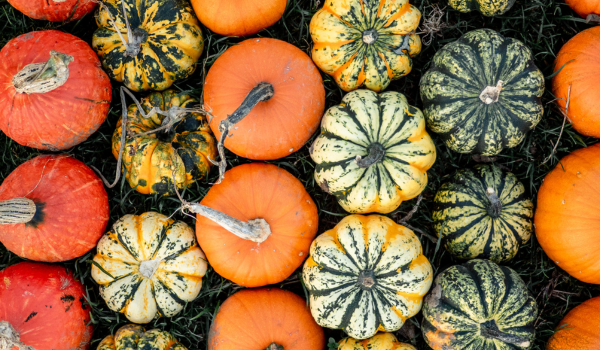
Winter squash varieties—such as acorn, butternut, and delicata—are harvested once fully matured. At maturity, their thick, sturdy skins protect the sweet flesh inside, allowing these vegetables to store well through the colder months while delivering valuable nutrients and antioxidants.
Acorn Squash
Nutrient-rich and antioxidant-packed
Acorn squash is part of the Cucurbitaceae family, which also includes pumpkins and zucchini. Its characteristic acorn shape ranges in color from white to deep green, with tender golden-orange flesh and a mild nutty flavor.
It provides vitamin C, vitamin A, potassium, magnesium, and several B vitamins. Acorn squash also contains anti-inflammatory carotenoids such as alpha-carotene, beta-carotene, and zeaxanthin.
How to enjoy: Roast, steam, or bake and add to salads, soups, and baked dishes.
Tip: The rind becomes tender when cooked—no peeling required.
Butternut Squash
Excellent source of vitamins A and C
With rich orange flesh and a sweet nutty flavor, butternut squash is one of the most nutrient-dense winter squashes. One cooked cup delivers more than 100% of the Daily Value (DV) for vitamin A and over 30% for vitamin C, along with potassium, magnesium, and manganese.
These antioxidant vitamins help protect cells against free radical damage and support immunity.
How to enjoy: Roast cubes with olive oil, blend into soup, or add to grain bowls.
Tip: Try seasoning with cinnamon, pepper, and sea salt for a warm, caramelized finish.
Spaghetti Squash
Low-carb pasta alternative
Spaghetti squash develops thin noodle-like strands once cooked. One cup contains only 10 grams of carbohydrates—far fewer than other starchy squashes—making it popular in low-carb recipes.
It provides fiber, vitamin C, manganese, and small amounts of B vitamins.
How to enjoy: Roast cut-side down, fluff strands with a fork, and serve with your favorite sauce.
Delicata Squash
Potassium-rich with edible skin
Delicata squash has a tender rind, a naturally sweet flavor, and fewer calories than many other varieties. One cup delivers 13% of the DV for potassium, an essential nutrient for heart and blood pressure regulation.
How to enjoy: Roast in thin slices and toss into salads, rice bowls, or grain dishes.
Tip: You can eat the skin—it softens beautifully when cooked.
Red Kuri Squash
Sweet flavor and packed with antioxidants
Red kuri squash, a Hubbard type, has a teardrop shape with vibrant red-orange skin. Inside is sweet golden flesh rich in vitamins A and C and potassium.
How to enjoy: Roast, bake, or puree into soups. Slice into strips, coat with olive oil, and roast at high heat.
Tip: The cooked rind is edible.
Sweet Dumpling Squash
Small, sweet, and antioxidant-dense
This petite squash boasts cream-colored skin with dark green stripes and naturally sweet flesh. It contains phenolic compounds and beta-carotene—nutrients known to protect cells from oxidative stress and inflammation.
How to enjoy: Roast whole halves and stuff with grains, cheese, and fall vegetables.
Musquée de Provence
Classic French heirloom rich in vitamins
This golden-brown French squash is visually stunning and nutrient-packed. Its bright orange flesh contains vitamins A and C along with antioxidant plant compounds.
How to enjoy: Roast or bake to intensify sweetness.
Tip: Often sold pre-cut at markets for ease of preparation.
North Georgia Candy Roaster
Large, sweet squash ideal for baking
This eye-catching pink squash can grow up to 15 pounds, with teal-tinted ends and a sweet pumpkin-like flavor. It contains vitamin A, vitamin C, and other essential nutrients.
How to enjoy: Roast, steam, or bake. Cooked squash freezes well for pies or soups.
Kabocha Squash
Japanese pumpkin with outstanding flavor
Kabocha squash has a dark green rind and intensely sweet flesh high in potassium, vitamin A, and vitamin C. Its creamy texture works well in sweet and savory dishes.
How to enjoy: Roast wedges, simmer in stews, or puree for soups or custards.
Tip: The rind softens when cooked and is edible.
Blue Hubbard Squash
High-fiber powerhouse
Blue Hubbard squash is known for its bluish-grey rind and mildly sweet yellow interior. One cooked cup provides 10 grams of fiber—over one-third of the recommended DV—plus vitamins A and C and potassium.
How to enjoy: Roast large chunks, blend into creamy soups, or add to pilafs and salads.

.png)


.png)
.png)
.png)
.png)
.png)
.png)
.png)
.png)
.png)
.png)
.png)
.png)
.png)
.png)


.png)
.png)
.png)
.png)

