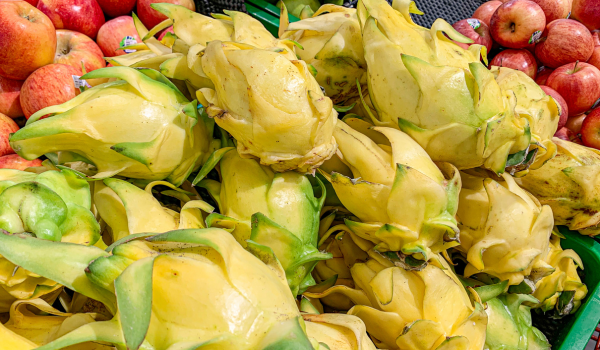
Yellow dragon fruit (Hylocereus megalanthus) is a tropical cactus fruit native to South America. It features bright white flesh dotted with tiny black seeds and a thick, yellow, scale-like peel that gives it its “dragon” name. Beyond its striking appearance and sweet flavor, this fruit delivers impressive nutritional value, including antioxidants, fiber, and essential minerals.
Here are five science-backed health benefits of yellow dragon fruit and how to enjoy it safely.
1. Supports Gut Health And Immunity
Yellow dragon fruit is rich in vitamin C and plant compounds called polyphenols. These antioxidants help protect cells from oxidative stress and may reduce inflammation, both of which support immune and digestive health.
The fruit also contains important trace minerals such as zinc, iron, and selenium, which contribute to immune function. These nutrients help the body defend against infections and maintain proper immune cell activity.
In addition, yellow dragon fruit provides prebiotic fiber. Prebiotics feed beneficial gut bacteria, allowing them to produce short-chain fatty acids (SCFAs). SCFAs help strengthen the intestinal lining, support anti-inflammatory responses, and assist in the production of T cells—white blood cells that play a key role in immune defense.
2. A Diabetic-Friendly Fruit Option
Yellow dragon fruit has a low glycemic index (GI), meaning it is less likely to cause sharp spikes in blood sugar compared to high-GI foods. This makes it a suitable fruit option for individuals managing diabetes or blood sugar fluctuations.
Both yellow and other dragon fruit varieties contain compounds that may help improve insulin sensitivity. Insulin resistance occurs when the body’s cells don’t respond effectively to insulin, the hormone responsible for transporting glucose from the bloodstream into cells for energy.
Including low-GI fruits like yellow dragon fruit as part of a balanced diet may support more stable blood sugar levels.
3. Supports Heart Health
Yellow dragon fruit provides several heart-supportive minerals, including:
Calcium
Calcium plays a role in proper muscle contraction, including heart muscle function. It also supports bone strength and overall balance.
Magnesium
Magnesium helps maintain normal muscle and nerve function and supports healthy blood vessel relaxation, promoting smooth blood flow.
Potassium
Potassium is essential for maintaining healthy blood pressure and balancing fluids and electrolytes. Proper electrolyte balance supports normal heart rhythm and nerve signaling.
In addition to these minerals, the tiny seeds inside yellow dragon fruit contain polyunsaturated fatty acids (PUFAs), including omega-3 and omega-6 fats. These healthy fats have anti-inflammatory properties that may contribute to cardiovascular protection.
4. May Help With Cholesterol Control
Yellow dragon fruit contains soluble fiber, which plays an important role in cholesterol regulation. Soluble fiber binds to fats and cholesterol in the digestive tract, helping the body eliminate them more efficiently.
The seeds may also contribute to lowering LDL (“bad”) cholesterol by slowing its absorption in the intestines. Elevated LDL cholesterol can increase the risk of heart disease and stroke by contributing to plaque buildup in arteries.
While early findings are promising, more research is needed to fully understand the fruit’s long-term effects on cholesterol and lipid metabolism.
5. May Relieve Constipation
Yellow dragon fruit contains both soluble and insoluble fiber, making it beneficial for digestive regularity.
Soluble fiber forms a gel-like substance that helps retain water in stool, preventing it from becoming too hard or dry. Insoluble fiber adds bulk and helps move stool through the colon more efficiently.
The fruit’s seeds also contain fatty acids, and it naturally contains sorbitol, a sugar alcohol that can have a mild laxative effect. Together, these components may help promote easier and more comfortable bowel movements.
Yellow Dragon Fruit Nutrition
One cup of yellow dragon fruit provides approximately:
Calories: 122
Fat: 0.38 grams
Sodium: 1.8 milligrams
Carbohydrates: 29.2 grams
Fiber: 3.24 grams
Protein: 1.22 grams
Vitamin C: 35.6 milligrams (about 40% of daily value)
Potassium: 371 milligrams (about 8% of daily value)
Magnesium: 25.2 milligrams (about 6% of daily value)
Calcium: 23.4 milligrams (about 2% of daily value)
It is relatively low in fat and sodium while providing meaningful amounts of vitamin C and potassium.
Potential Risks And Allergies
Allergic reactions to dragon fruit are rare but have been reported. In isolated cases, individuals experienced symptoms such as tongue swelling and breathing difficulty after consuming dragon fruit juice.
Some research suggests that proteins in the seeds of both red and white-fleshed dragon fruit may trigger allergic responses in sensitive individuals. Reactions can include skin rashes or vomiting.
Although the flesh itself may not contain allergy-triggering proteins, it is nearly impossible to consume the fruit without also ingesting the seeds. Anyone with known food allergies or sensitivity to similar fruits should exercise caution.
Tips For Enjoying Yellow Dragon Fruit
Yellow dragon fruit is versatile and easy to incorporate into meals and snacks. Here are several simple ways to enjoy it:
Scoop And Eat
Slice the fruit in half and scoop out the flesh with a spoon. The peel acts as a natural bowl.
Blend Into Smoothies
Add chunks of dragon fruit to smoothies for a tropical flavor and vibrant color.
Toss Into Salads
Dice the flesh and mix it into leafy green salads with nuts, seeds, and a light cheese such as feta.
Use As A Garnish
Thin slices can be used as a decorative and flavorful garnish for mild fish dishes.
Top Chia Pudding
Add diced fruit to chia pudding for extra fiber and nutrients. Pairing it with coconut milk enhances its tropical taste.
Dragon fruit can also be processed into jams, juices, and even fermented beverages like fruit wines.
The Bottom Line
Yellow dragon fruit is more than a visually striking tropical fruit. It provides antioxidants, fiber, essential minerals, and heart-healthy fats that support gut health, immunity, blood sugar control, cardiovascular function, and digestive regularity.
While generally safe for most people, those with food sensitivities should be mindful of potential seed-related allergies. Adding this nutrient-dense fruit to a balanced diet can be a flavorful way to boost overall health.
Was this page helpful?


















.png)
.png)
.png)
.png)


.png)
.png)
.png)
.png)
.png)
.png)
.png)
.png)
.png)
.png)




.png)
.png)
.png)
.png)
.png)
.png)
.png)