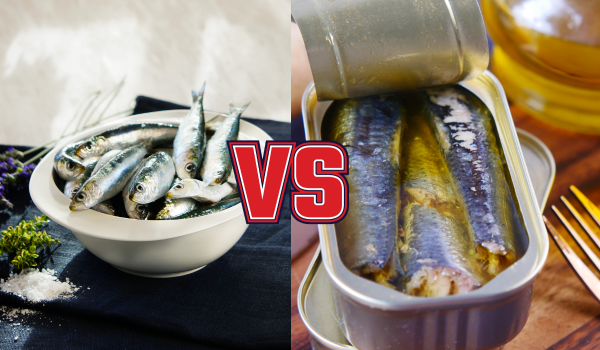
Anchovies and sardines are small, oily fish that are commonly canned or jarred. Both are rich in protein and healthy fats, but they differ slightly in their nutrient profiles. Comparing them can help you decide which one best fits your nutrition goals.
Which Small Fish Has More Protein?
Both anchovies and sardines are high-quality protein sources, but anchovies contain slightly more protein per serving.
A 1-ounce serving provides:
-
Sardines (canned in oil): about 7 grams of protein
-
Anchovies (canned in oil): about 8 grams of protein
Daily protein needs vary depending on age, activity level, and health status. Many healthy adults benefit from consuming roughly 1.2–1.6 grams of protein per kilogram of body weight per day.
Protein is essential for tissue repair, muscle maintenance, and overall growth and development. Even a small serving of anchovies or sardines can meaningfully contribute to daily protein intake.
Which Is Better for Healthy Fats and Omega-3s?
Sardines contain more total unsaturated fat per serving, but anchovies provide more omega-3 fatty acids.
Per 1-ounce serving:
-
Sardines (canned in oil): higher in total unsaturated fat
-
Anchovies (canned in oil): higher in omega-3 fatty acids
Omega-3 fatty acids are linked to several health benefits:
Heart health
Omega-3s help lower triglycerides and may reduce the risk of heart disease and stroke. Replacing saturated fats with unsaturated fats also supports cardiovascular health.
Brain health
Low omega-3 intake has been associated with cognitive and mental health concerns. Adequate intake may support memory and overall brain function.
Eye health
Higher omega-3 intake is linked to a lower risk of age-related macular degeneration and may help reduce dry eye symptoms.
How Do They Compare for Vitamins and Minerals?
Anchovies and sardines both provide important micronutrients, but they differ in specific strengths.
Vitamin B12
Sardines provide much more vitamin B12 than anchovies. This vitamin supports nerve function, red blood cell production, and DNA synthesis.
Vitamin D
Sardines contain significantly more vitamin D, which helps the body absorb calcium and maintain bone health.
Iron
Anchovies provide more iron than sardines. Iron is essential for oxygen transport in the blood and for muscle and tissue function.
Phosphorus
Sardines are richer in phosphorus, a mineral needed for strong bones, teeth, and cell structure.
Calcium
Sardines provide more calcium, which supports bone strength and helps prevent bone loss.
Nutritional Comparison Per 1-Ounce Serving
Typical values for canned fish in oil:
Sardines
-
Calories: about 59
-
Protein: about 7 grams
-
Fat: about 3 grams
-
Calcium: higher
-
Vitamin B12: higher
-
Vitamin D: higher
-
Sodium: lower
Anchovies
-
Calories: about 60
-
Protein: about 8 grams
-
Fat: about 3 grams
-
Iron: higher
-
Magnesium: higher
-
Potassium: higher
-
Sodium: much higher
Other Similarities Between Anchovies and Sardines
Both anchovies and sardines are forage fish, meaning they sit low on the food chain and are eaten by larger fish and marine animals. Because of this, they tend to contain lower levels of mercury compared with larger fish.
Sardines are generally larger in size than anchovies, but both are small fish overall. After harvesting, they are usually canned or jarred in oil or water to make them shelf-stable.
One major difference is processing. Anchovies are often salt-cured, which gives them a strong flavor and greatly increases their sodium content.
What To Know Before Adding Them to Your Diet
Fresh anchovies and sardines are not naturally high in sodium, but canned or jarred versions often contain added salt.
A small serving of anchovies can contain nearly half of the recommended daily sodium limit. High sodium intake is associated with increased risk of high blood pressure, heart disease, and stroke.
When buying canned fish:
-
Check nutrition labels carefully
-
Choose low-sodium or no-salt-added options when available
Both sardines and anchovies usually contain edible bones. These become soft during the canning process and provide calcium, but young children and people with swallowing difficulties may want to avoid them.
Bottom Line
Anchovies provide slightly more protein and omega-3s, while sardines offer more calcium, vitamin D, and vitamin B12. Both are nutritious choices that support heart health, brain health, and overall nutrition. The better choice depends on whether you prioritize protein and omega-3s or bone-supporting vitamins and minerals.







.png)
.png)
.png)
.png)

.png)
.png)
.png)
.png)
.png)
.png)
.png)
.png)
.png)
.png)



.png)
.png)
.png)
.png)
.png)
.png)
.png)
.png)