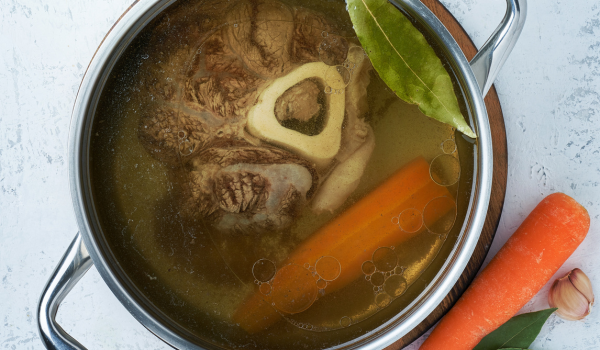
Bone broth is rich in protein, amino acids, collagen, and essential minerals that support overall wellness. While you can enjoy it at any time of day, the ideal time to drink bone broth depends on your specific goal—whether that’s joint support, better sleep, steady energy, improved digestion, or post-workout recovery.
For Collagen and Joint Health
Best Time: Any time, especially after physical activity
Bone broth contains collagen, a structural protein found in connective tissue that helps maintain healthy joints, tendons, and ligaments. Collagen provides building blocks that support cartilage and may help reduce joint discomfort, particularly after high-impact or repetitive movements.
Drinking bone broth after exercise may be especially helpful because the amino acids it provides—such as glycine and proline—support tissue repair and recovery. Consistent intake matters more than timing, so incorporating it regularly into your routine can support long-term joint health.
For Better Sleep
Best Time: Evening, 1–2 hours before bed
Bone broth naturally contains glycine, an amino acid that may promote relaxation and support sleep quality. Glycine plays a role in calming the nervous system and may help regulate the body’s sleep-wake cycle.
Some research suggests glycine can slightly lower core body temperature, which signals the body that it’s time to rest. Additionally, sipping a warm beverage in the evening may enhance relaxation. As your body cools afterward, it can further promote sleepiness.
If drinking bone broth at night, choose a low-sodium version. Excess sodium before bed may increase thirst or disrupt sleep due to nighttime bathroom trips.
For an Energy Boost
Best Time: Morning or early afternoon
Starting your day with bone broth can provide steady energy without the stimulation associated with caffeine. Because it contains protein and electrolytes like sodium and potassium, bone broth supports hydration and helps maintain stable energy levels.
Unlike sugary snacks that can cause rapid spikes and crashes in blood sugar, the protein in bone broth promotes steadier blood sugar levels. This may help improve focus and reduce mid-morning or afternoon fatigue.
It can be enjoyed on its own or paired with a balanced breakfast to enhance satiety and sustain energy throughout the day.
For Gut Health
Best Time: Any time, especially on an empty stomach
Bone broth contains gelatin, collagen, and amino acids such as glutamine, which may help support the lining of the digestive tract. These nutrients contribute to maintaining the intestinal barrier and promoting digestive balance.
Glutamine plays a role in supporting gut integrity and may help reduce inflammation in the digestive system. Some animal research suggests these compounds may benefit inflammatory digestive conditions, though more human studies are needed to confirm these effects.
Because bone broth is easy to digest, it can be particularly soothing during periods of digestive discomfort or when reintroducing foods after illness.
For Workout Recovery
Best Time: Within 60 minutes after exercise
After a workout, your muscles are primed to absorb nutrients needed for repair and recovery. Drinking bone broth within an hour of finishing exercise may help replenish fluids and electrolytes lost through sweat.
The amino acids in bone broth—especially glycine and proline—support connective tissue repair. While bone broth is not a complete protein source on its own, pairing it with additional protein can enhance muscle recovery.
Final Thoughts
There is no single “perfect” time to drink bone broth. The best timing depends on your goal:
Morning for steady energy
Evening for relaxation and sleep support
Post-workout for recovery
Any time for joint and digestive support
Incorporating bone broth consistently into your routine is more important than exact timing. Whether enjoyed as a warm beverage, used as a soup base, or added to meals, bone broth can be a nourishing addition to a balanced diet.













.png)
.png)
.png)
.png)


.png)
.png)
.png)
.png)
.png)
.png)
.png)
.png)
.png)
.png)




.png)
.png)
.png)
.png)
.png)
.png)
.png)