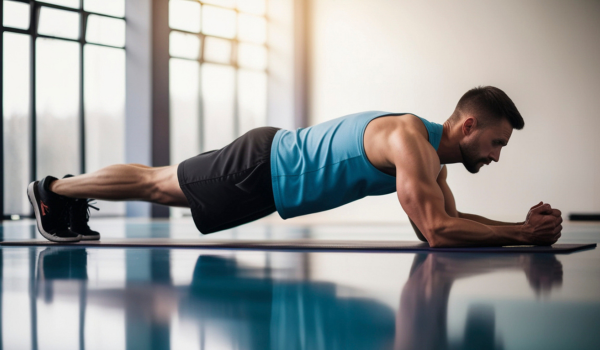
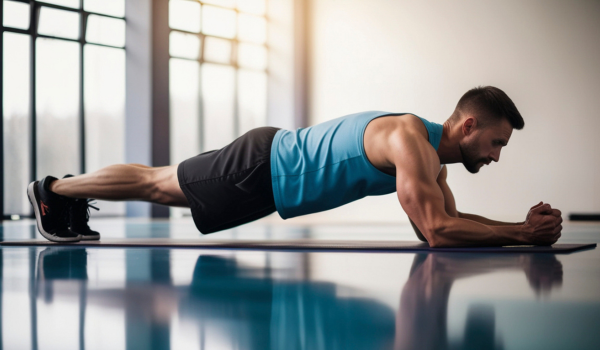
The plank has long been considered one of the best bodyweight exercises for developing core strength. However, it’s far from the only option. Several other exercises can strengthen your abdominal muscles just as effectively while also improving stability, balance, and coordination.
The four exercises below require no equipment, can be performed almost anywhere, and are suitable for most fitness levels. Adding them to your routine can help build a stronger core, improve posture, and reduce the risk of injury.
Dead Bug
Why It Works
The Dead Bug is one of the most effective exercises for strengthening the deep core muscles while teaching your body to stabilize the spine during movement. Unlike many abdominal exercises, it trains your core to resist excessive lower back arching as your arms and legs move independently.
This movement pattern is especially valuable for improving posture and protecting your lower back during everyday activities and strength training.
How To Perform It
- Lie flat on your back.
- Raise both arms toward the ceiling.
- Bend your knees to approximately 90 degrees so your shins are parallel to the floor.
- Press your lower back gently into the floor and tighten your abdominal muscles.
- Slowly lower your right arm overhead while extending your left leg toward the floor.
- Stop just before your arm and leg touch the ground, ensuring your lower back stays flat.
- Return to the starting position with control.
- Repeat on the opposite side.
Aim for 8–12 slow repetitions on each side while maintaining steady breathing and controlled movement.
Bicycle Crunch
Why It Works
The Bicycle Crunch combines core rotation with alternating leg movement, making it highly effective for strengthening multiple abdominal muscles at once.
In addition to improving core strength, this exercise enhances coordination and rotational control, both of which are important for sports and daily movement.
Performing the exercise slowly rather than rushing each repetition increases muscle activation and reduces unnecessary strain on the neck.
How To Perform It
- Lie on your back with your hands lightly supporting your head.
- Keep your elbows wide apart.
- Lift your shoulders slightly off the floor.
- Bring your knees into a tabletop position.
- Extend your right leg while bringing your left knee toward your chest.
- Rotate your torso so your right elbow moves toward your left knee.
- Return to center and switch sides.
- Continue alternating in a smooth, controlled rhythm.
Complete 20–30 alternating repetitions, focusing on rotating through your torso rather than pulling with your neck.
Shoulder Taps
Why It Works
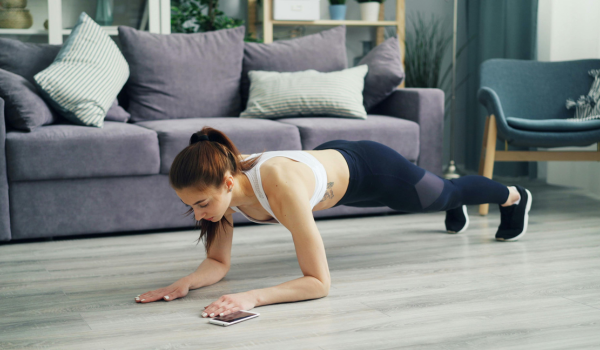
Shoulder Taps build core stability by forcing your body to resist rotation while supporting itself on one arm.
Compared with a traditional plank, this dynamic variation requires greater balance and coordination because your core must stabilize your hips throughout the movement.
It also strengthens the shoulders, chest, and upper body while improving overall body control.
How To Perform It
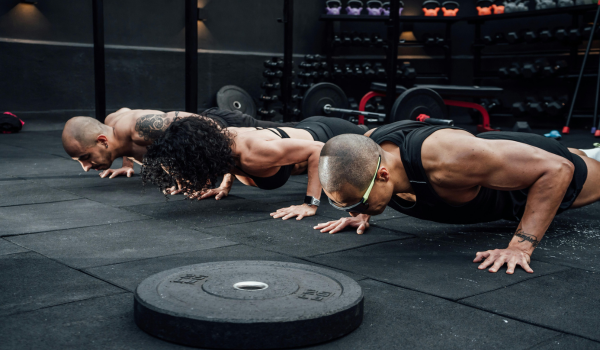
- Begin in a high plank position with your hands directly beneath your shoulders.
- Position your feet slightly wider than hip-width apart for added stability.
- Tighten your core and squeeze your glutes.
- Lift your right hand and tap your left shoulder.
- Return your hand to the floor without allowing your hips to rotate.
- Repeat with your left hand tapping your right shoulder.
Aim for approximately 20 total taps, or adjust the number according to your current fitness level while maintaining proper form.
Bird Dog
Why It Works
The Bird Dog is a low-impact exercise that strengthens the core while improving balance, coordination, and spinal stability.
Because the movement emphasizes controlled limb motion while maintaining a neutral spine, it is often recommended for individuals looking to improve posture or reduce lower back discomfort.
How To Perform It
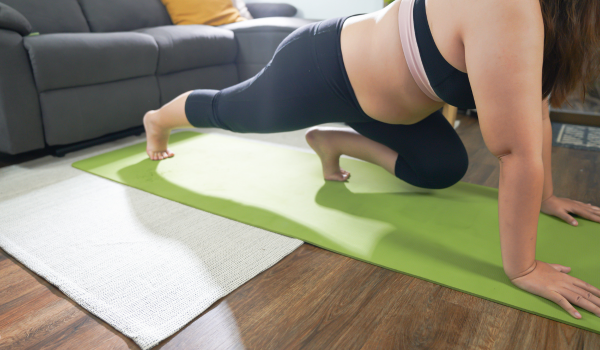
- Start on your hands and knees.
- Position your hands beneath your shoulders and your knees beneath your hips.
- Tighten your abdominal muscles.
- Extend your right arm forward while simultaneously extending your left leg behind you.
- Keep both your arm and leg in line with your torso.
- Hold the position for one to three seconds.
- Slowly return to the starting position.
- Repeat with the opposite arm and leg.
Perform 8–12 repetitions on each side while keeping your hips level and minimizing unnecessary body movement.
Tips for Better Core Training
Focus On Quality Over Speed
Moving slowly allows your core muscles to remain under tension longer and helps maintain proper technique.
Maintain Proper Breathing
Avoid holding your breath. Exhale during the effort phase of each movement and inhale as you return to the starting position.
Keep Your Spine Neutral
Throughout every exercise, avoid excessive arching or rounding of your lower back. Maintaining a neutral spine improves effectiveness and reduces injury risk.
Train Consistently
Aim to include core exercises two to three times per week. Combining these movements with full-body strength training and regular cardiovascular exercise provides the greatest long-term benefits.
The Bottom Line
Although planks remain an excellent exercise, they are not the only way to develop a strong, stable core. Exercises like the Dead Bug, Bicycle Crunch, Shoulder Taps, and Bird Dog challenge your abdominal muscles from different angles while improving balance, coordination, posture, and spinal stability.
Including a variety of core exercises in your workout routine can help build functional strength, improve athletic performance, and support better movement in everyday life.
.png)


.png)


.png)

.png)


.png)

.png)