How To Improve Your Muscular Endurance: Tips And Workouts For Success
Muscular endurance refers to the ability of your muscles to contract repeatedly over an extended period without fatigue. This form of fitness is essential for both athletic performance and everyday activities such as running long distances, swimming, climbing stairs, carrying groceries, and maintaining proper posture. Improving muscular endurance can also reduce injury risk and support long-term physical health.
What Is Muscular Endurance?
Muscular endurance measures how long a muscle or muscle group can sustain repeated contractions.
Difference Between Endurance And Strength
Muscular endurance focuses on how long a muscle can perform an activity, while muscular strength refers to how much force a muscle can produce at one time. For example, endurance determines how long you can carry grocery bags, while strength determines how many bags you can lift at once.
Training For Muscular Endurance
Training for muscular endurance involves performing exercises for longer durations using lighter resistance and higher repetitions.
Weight Selection
Choose a resistance that is approximately 60–70% of your maximum effort. This allows you to perform more repetitions while maintaining proper form.
Repetition And Set Structure
Instead of heavy weights and fewer reps, aim for higher reps and more sets. For example, five sets of 20 repetitions with lighter weight instead of three sets of 15 with heavier weight.
Rest Periods
Shorter rest periods between sets increase muscular fatigue and help improve endurance capacity.
Exercise Selection
Bodyweight movements such as push-ups, squats, planks, and lunges are especially effective for endurance training.
How To Create A Muscular Endurance Workout
Effective endurance workouts combine resistance training with minimal rest and sustained effort.
Increase Repetitions And Sets
Higher repetitions and more total volume help muscles adapt to prolonged effort.
Include Isometric Exercises
Static holds such as planks and wall sits improve endurance by forcing muscles to remain contracted for extended periods.
Reduce Rest Between Sets
Limiting rest challenges muscles to recover quickly and maintain output.
Combine Strength And Cardio
Blending resistance exercises with cardio movements improves overall stamina and muscular efficiency.
Apply Progressive Overload
Gradually increase repetitions, sets, or duration to continue building endurance over time.
Sample Muscular Endurance Workout
This simple at-home workout targets multiple muscle groups and can be adjusted for different fitness levels.
Push-Ups
Start in a high plank position with hands shoulder-width apart. Lower your chest toward the floor while keeping your core tight, then push back up. Repeat for high repetitions.
Tricep Dips
Sit on the edge of a sturdy chair or bench. Lower your body by bending your elbows, then push back up using your arms.
Wall Sits
Stand with your back against a wall and lower into a squat position until knees and hips form 90-degree angles. Hold for as long as possible.
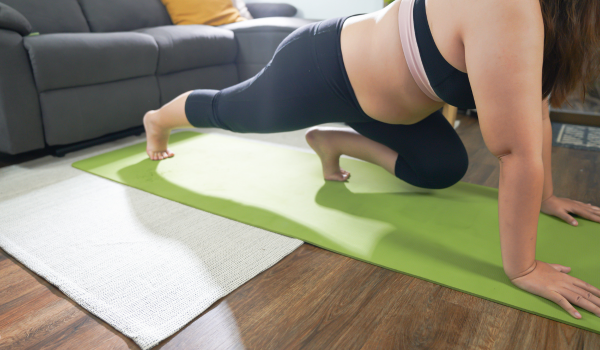
Mountain Climbers
Begin in a plank position and alternate driving knees toward your chest at a steady or increasing pace.
To increase difficulty, add planks, burpees, or short cardio intervals.
Tips For Injury Prevention
Training safely is essential for long-term endurance gains.
Listen To Your Body
Stop exercises that cause pain and allow adequate recovery time between sessions.
Follow The 10% Rule
Increase workout intensity or volume by no more than 10% per week to reduce injury risk.
Maintain Balanced Training
Include strength, cardio, and flexibility exercises to prevent overuse injuries.
Breathe Properly
Exhale during exertion and inhale during recovery to avoid unnecessary strain.
Consider Professional Guidance
Working with a certified personal trainer can help ensure correct form and progression.
How To Measure Muscular Endurance
Muscular endurance is commonly measured by performing exercises until fatigue.
Push-Up Test
Assesses endurance of the chest, shoulders, and arms.
Sit-Up Test
Measures endurance of abdominal and hip flexor muscles.
Squat Test
Evaluates endurance of lower-body muscles, including quadriceps and glutes.
These tests help track progress and identify areas for improvement.
Final Takeaway
Improving muscular endurance requires consistent training, proper exercise selection, and gradual progression. By focusing on higher repetitions, shorter rest periods, and full-body movement patterns, you can build endurance that supports athletic performance and everyday activities while reducing injury risk.


.png)




.png)






.png)



.png)



.png)

.png)