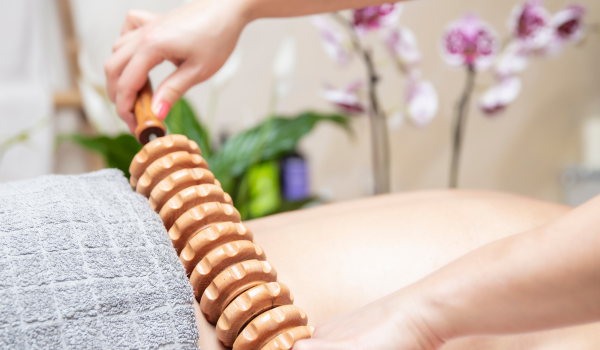
Wood therapy is a type of massage that uses specially designed wooden tools to apply pressure, shape the body, and stimulate circulation. It is often promoted as a natural method to improve skin appearance and support lymphatic drainage, though scientific evidence supporting these claims is limited.
How Wooden Tools Enhance Massage
During a wood therapy session, therapists use wooden instruments shaped to match different parts of the body.
Typical steps include:
-
You undress to your comfort level
-
Massage oil is applied to reduce friction
-
The therapist uses wooden rollers, cups, or rods
-
Techniques such as rolling, kneading, and pressing are applied
These movements are intended to stimulate blood flow, relax muscles, and encourage lymphatic drainage.
Can Wood Therapy Improve Your Skin?
Research on wood therapy specifically is very limited. However, some related massage and cellulite studies suggest possible effects.
May Reduce The Appearance Of Cellulite
Some studies using massage or vibration-based devices have shown temporary improvements in the appearance of cellulite. These effects may be due to increased circulation and fluid movement in the skin.
However, these studies did not specifically use wooden tools, and results may also be influenced by massage oils or techniques.
May Promote Relaxation
Touch-based therapies, including massage, are known to promote relaxation. Some research suggests that even contact with natural materials like wood can create a calming effect.
While this does not directly prove wood therapy’s effectiveness, it may contribute to stress relief during sessions.
Other Claimed Benefits
Practitioners often claim wood therapy may:
-
Improve blood circulation
-
Enhance lymphatic drainage
-
Smooth or soften skin
These benefits are not yet strongly supported by scientific evidence.
Is Wood Therapy Safe?
Massage therapy is generally considered safe, but using wooden tools may slightly increase certain risks if not done properly.
Possible Mild Side Effects
-
Temporary soreness
-
Bruising
-
Skin sensitivity
Rare But Serious Risks
-
Nerve injury
-
Blood clots
-
Bone injury (especially with deep pressure techniques)
People who may be at higher risk include:
-
Older adults
-
Individuals with osteoporosis
-
People with circulatory or medical conditions
Choosing a trained and licensed therapist can help reduce these risks.
How To Prepare For Your Session
Preparing properly can help ensure a safe and comfortable experience.
-
Avoid eating immediately before the session
-
Stay hydrated
-
Arrive early to discuss your goals and health conditions
-
Inform the therapist about allergies or medical issues
-
Review and sign a consent form
During the session, communicate openly. If you feel discomfort or pain, let the therapist know or ask to stop.
Are There Alternatives For Cellulite Treatment?
Cellulite is a common and harmless condition that affects most people, especially women. Treatment is optional and based on personal preference.
If you are looking for alternatives, some options include:
Laser Treatments
These use targeted energy to break down connective tissue under the skin and may improve skin texture. Results can last for months to a year.
Energy-Based Treatments
Technologies such as radiofrequency, ultrasound, or infrared light heat the skin and stimulate collagen production. These treatments usually require repeated sessions.
Mechanical Treatments
Some procedures involve breaking fibrous bands beneath the skin to smooth its appearance. These may offer longer-lasting results but can involve minor recovery time.
Final Thoughts
Wood therapy is a popular wellness trend that may offer relaxation and temporary improvements in skin appearance. However, there is limited scientific evidence supporting its long-term effectiveness.
If you are considering wood therapy, treat it as a complementary option rather than a medical treatment. Consulting a healthcare provider and choosing a qualified therapist can help ensure a safer experience.

.png)

.png)


.png)

.png)