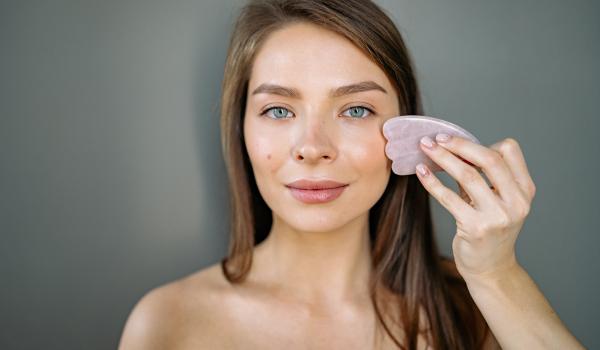
Gua sha is a traditional technique that involves gently scraping the skin to stimulate circulation and relieve tension. It is commonly used for reducing puffiness, easing muscle pain, and supporting overall wellness, although scientific evidence is still limited.
How Gua Sha Originated
Gua sha comes from traditional Chinese medicine (TCM) and has been practiced for thousands of years.
Historically, tools like spoons, coins, or animal horns were used to scrape the skin in upward strokes. This was believed to release blocked “qi” (energy), which in TCM is thought to contribute to pain, inflammation, and illness.
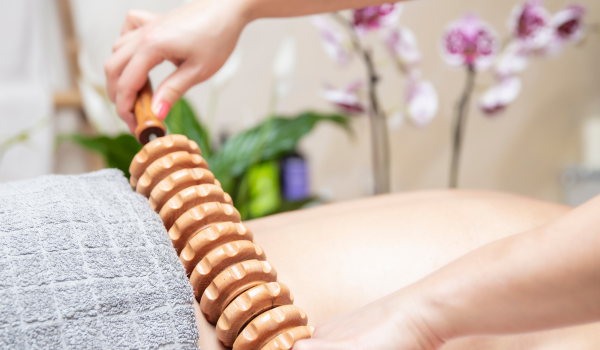
Today, gua sha tools are typically made from materials like jade, amethyst, or stainless steel. The technique is now widely used for both facial care and body therapy, either by professionals or at home.
What Benefits Does Gua Sha Offer?
While research is still developing, gua sha may provide several short-term benefits.
May Reduce Inflammation And Puffiness
The scraping motion increases microcirculation (blood flow in small vessels), which may help reduce swelling and inflammation. Temporary redness (petechiae) can also trigger a mild immune response that supports healing.
May Help Relieve Headaches
There is limited evidence suggesting gua sha may help reduce headache symptoms. Most findings are anecdotal or based on small case studies, so more research is needed.
May Ease Neck, Shoulder, And Back Pain
Some small studies suggest gua sha can reduce pain and improve mobility, especially for people who spend long hours sitting or working at a computer.
May Support Muscle Recovery
Like other massage techniques, gua sha may help reduce soreness after exercise and improve recovery by increasing blood flow to muscles.
May Help With Chronic Pain
Some people use gua sha for conditions like fibromyalgia. Pain relief may be temporary and could be partly due to counterstimulation or placebo effects.
May Relieve Breast Engorgement
For breastfeeding individuals, gua sha may help relieve discomfort by supporting milk flow. Early research suggests it may be as effective as warm compress massage.
May Ease Perimenopause Symptoms
Some studies suggest gua sha may help reduce symptoms like fatigue, insomnia, and hot flashes. However, more high-quality research is needed.
How To Use A Gua Sha Tool
Using gua sha correctly is important to avoid irritation or injury.
Before starting:
-
Clean your skin
-
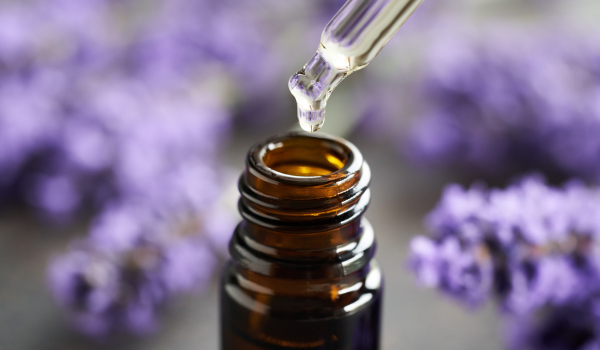
Apply oil or serum to reduce friction
Basic Technique
-
Use gentle pressure
-
Hold the tool at about a 45-degree angle
-
Glide in upward strokes toward the heart
-
Follow the natural contours of your body
Facial Gua Sha Steps
-
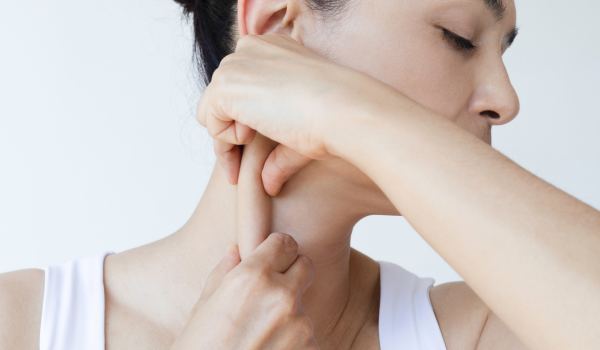
Neck to chin
-
Chin to ear
-
Cheek to ear
-
Under-eye outward strokes
-
Brow and forehead upward strokes
The process should feel relaxing, not painful. If it hurts, you are likely applying too much pressure.
Choosing The Right Tool
For beginners, a flat, heart-shaped tool with curved edges is a good option.
Common materials include:
-
Jade: naturally cooling and smooth
-
Amethyst: similar cooling effect
-
Stainless steel: durable and easy to clean
Choose a tool that fits comfortably in your hand and matches the contours of your face or body.
How Often Should You Use Gua Sha?
Frequency depends on your skin and goals.
-
1 time per week is commonly recommended
-
2–3 times per week may be suitable for some people
-
Short daily sessions (around 5 minutes) are also common
If unsure, consult a professional for personalized guidance.
Risks And Safety Considerations
Gua sha is generally safe when done properly, but it is not suitable for everyone.
Common Side Effects
-
Redness
-
Bruising
-
Mild tenderness
These effects are usually temporary and fade within a few days.
Avoid Gua Sha If You:
-
Have open wounds or sunburn
-
Recently had surgery
-
Take blood thinners
-
Have a clotting disorder
-
Have certain circulation conditions or diabetes
Improper technique or unclean tools can increase the risk of infection or skin damage.
Final Thoughts
Gua sha is a popular wellness practice that may help improve circulation, reduce tension, and promote relaxation. While early evidence and user experiences are promising, more research is needed to confirm its long-term benefits.
If you want to try gua sha, start gently, use proper tools, and treat it as a complementary practice—not a replacement for medical care.
.png)
.png)

.png)
.png)