Compression socks are often associated with older adults or people who have circulation problems. But they're not exclusively medical garments for seniors.
Younger adults may also find compression socks useful, particularly if they spend long hours sitting or standing, travel frequently, exercise regularly, or experience swelling and tired legs.
By applying graduated pressure to the legs, compression socks can help support blood flow and reduce fluid buildup. However, choosing the right compression level and wearing them correctly are important, especially if you have an underlying health condition.
Here's what to know before adding compression socks to your routine.
What Are Compression Socks?
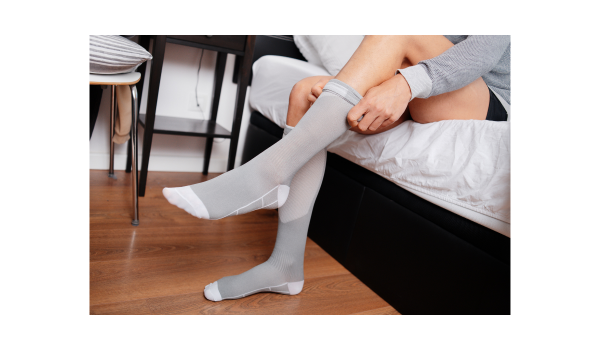
Compression socks are specially designed stockings that fit more tightly than ordinary socks.
They apply controlled pressure to the lower legs, usually with the greatest compression around the ankle and gradually less pressure farther up the leg.
This pressure can help veins move blood back toward the heart rather than allowing blood to collect in the lower legs.
Compression socks are available in different:
-
Lengths
-
Materials
-
Sizes
-
Compression strengths
-
Styles
Some extend only to the knee, while others reach the thigh or resemble full-length tights.
How Do Compression Socks Improve Circulation?
Your leg veins have to move blood upward against gravity to return it to your heart.
Muscle contractions from walking and other movements help with this process. But when you remain seated or standing in one position for a long time, blood and fluid may accumulate in the lower legs.
Compression socks provide external pressure that supports this upward movement of blood.
They may help reduce:
-
Leg swelling
-
Ankle swelling
-
Feelings of heaviness
-
Leg fatigue
-
Discomfort associated with prolonged sitting or standing
This is why compression garments are commonly used for certain venous and lymphatic conditions.
Compression Socks Aren't Just for Older Adults
Age itself isn't the main factor determining whether someone might benefit from compression socks.
Lifestyle and health circumstances matter, too.
Younger adults may consider them if they:
-
Work at a desk for long periods
-
Stand throughout their workday
-
Frequently take long flights
-
Exercise regularly
-
Experience swelling in their legs or feet
-
Are pregnant
-
Have certain circulation problems
-
Have varicose veins
-
Experience specific forms of orthostatic intolerance
Athletes are another group increasingly using compression garments, particularly during recovery.
They May Help During Long Workdays
People who work in professions that involve hours of sitting or standing may experience tired, heavy, or swollen legs by the end of the day.
Examples include:
-
Office workers
-
Nurses
-
Healthcare professionals
-
Retail employees
-
Teachers
-
Restaurant workers
-
Drivers
-
Factory workers
Remaining in one position for long periods can make it more difficult for blood and fluid to move efficiently through the lower legs.
Compression socks may help reduce some of this discomfort.
However, they're not a substitute for movement.
When possible, take regular breaks to walk, stretch your legs, or move your ankles.
Compression Socks May Be Helpful During Flights
Long-distance travel often means remaining seated for hours.
Prolonged immobility can slow blood flow in the legs and is one factor associated with an increased risk of deep vein thrombosis (DVT), a type of blood clot that usually forms in a deep vein in the leg.
Compression stockings may help promote circulation and reduce swelling during long flights.
Other useful strategies during extended travel include:
-
Getting up and walking periodically when possible
-
Moving your ankles and feet while seated
-
Avoiding extremely restrictive clothing
-
Staying appropriately hydrated
People with an elevated risk of blood clots should talk with a healthcare professional about specific travel precautions.
They May Support Exercise Recovery
Compression socks have also become popular among runners, cyclists, gym-goers, and other active adults.
Some research suggests that wearing compression garments after exercise may help reduce muscle soreness and support recovery.
They may be particularly appealing after activities that heavily involve the lower body, such as:
-
Running
-
Hiking
-
Cycling
-
Weight training
-
Long-distance walking
-
Team sports
However, compression socks aren't a shortcut to better fitness.
Sleep, nutrition, hydration, rest, and an appropriately designed training program remain more important components of recovery.
They May Reduce Swelling
Compression garments are commonly used to help manage certain types of swelling.
By applying external pressure, they may help prevent excess fluid from collecting around the ankles, feet, and calves.
This can be useful for some people with edema or lymphedema.
But unexplained swelling shouldn't automatically be treated at home with compression socks.
Sudden swelling—especially if it occurs in only one leg or is accompanied by pain, warmth, redness, chest pain, or difficulty breathing—requires prompt medical attention.
They May Help With Varicose Veins
Varicose veins occur when veins become enlarged or twisted, often because the valves that help move blood upward aren't functioning efficiently.
Compression socks can help support venous blood flow and may reduce symptoms such as:
-
Aching
-
Swelling
-
Heaviness
-
Leg fatigue
They won't necessarily eliminate existing varicose veins, but they may be one component of symptom management.
Compression May Help Some People With Dizziness When Standing
Some people experience dizziness, lightheadedness, or fainting after standing because their blood pressure or circulation changes.
Compression garments may be recommended in certain cases to reduce blood pooling in the lower body.
This can sometimes be relevant for people with conditions involving orthostatic intolerance.
However, this isn't something to self-treat based solely on symptoms.
Frequent dizziness or fainting can have many causes and should be evaluated by a healthcare professional.
How Long Should You Wear Compression Socks?
There isn't one ideal wearing schedule for everyone.
How long you should wear compression socks depends on why you're using them, the amount of compression, and your health.
Someone using compression socks after exercise might wear them for several hours.
A traveler may use them throughout a long flight.
Someone who stands all day at work might wear them throughout the working day.
Unless you've specifically been advised otherwise, compression socks are generally removed before sleeping.
For medical conditions, follow your healthcare provider's recommendations rather than choosing a schedule yourself.
Can You Sleep in Compression Socks?
For most healthy people using compression socks for everyday purposes, wearing them overnight isn't usually necessary.
When you're lying down, gravity has less effect on blood pooling in your lower legs.
However, healthcare professionals may recommend overnight compression in specific medical situations.
If you're considering sleeping in compression socks because of swelling, circulation problems, or another health condition, ask your healthcare provider first.
Choosing the Right Compression Level
Compression strength is commonly measured in millimeters of mercury (mmHg).
Compression products may generally fall into ranges such as:
-
Less than 20 mmHg: Lower compression
-
20-30 mmHg: Moderate compression
-
More than 30 mmHg: Higher compression
Lower-pressure products are commonly available without a prescription and may be used for everyday comfort, travel, or mild swelling.
Moderate and higher compression levels are more likely to be used for specific medical conditions and should ideally be selected with professional guidance.
More compression isn't automatically better.
Excessive pressure may be uncomfortable or inappropriate for certain people.
Getting the Right Size Matters
Compression socks only work properly when they fit correctly.
A pair that's too loose may not provide adequate compression, while one that's too tight could cause discomfort or interfere with circulation.
Depending on the product, you may need to measure:
-
Ankle circumference
-
Calf circumference
-
Leg length
-
Thigh circumference
Follow the manufacturer's sizing chart rather than assuming your regular shoe or sock size will be appropriate.
How To Put Compression Socks On
Because compression socks are intentionally tight, putting them on can take some practice.
They're often easiest to put on earlier in the day before significant swelling develops.
A common technique is to:
-
Turn the sock partially inside out down to the heel.
-
Place your foot into the sock.
-
Position the heel correctly.
-
Gradually roll or pull the fabric upward.
-
Smooth out wrinkles as you go.
Avoid allowing the fabric to bunch or roll tightly around one area of your leg.
The sock should feel snug but shouldn't cause significant pain, numbness, or tingling.
How To Care for Compression Socks
Regular washing helps keep compression garments clean and maintain their elasticity.
Follow the manufacturer's care instructions, since materials vary.
In general, many compression socks can be washed with mild detergent and air-dried.
Having multiple pairs can make daily use easier because you'll always have a clean pair available.
Compression garments also lose elasticity over time.
Depending on how frequently they're worn and washed, replacement may be needed every few months.
Who Should Be Careful With Compression Socks?
Compression socks aren't appropriate for everyone.
Talk with a healthcare professional before using them if you have conditions such as:
-
Peripheral arterial disease
-
Significant circulation problems
-
Peripheral neuropathy
-
Fragile or damaged skin
-
Dermatitis
-
Open wounds
-
Certain severe heart conditions
-
Significant loss of sensation in the legs
People who can't reliably feel or communicate excessive pressure may also require additional caution.
This matters because they might not notice that a compression garment is too tight or causing skin damage.
Signs Your Compression Socks May Be Too Tight
Properly fitted compression socks should feel firm and supportive—not painful.
Stop using them and seek medical advice if you develop symptoms such as:
-
Numbness
-
Tingling
-
Increasing pain
-
Significant skin discoloration
-
Cold feet or toes
-
Skin irritation
-
New or worsening swelling
-
Deep marks that don't resolve
These symptoms could indicate that the garment doesn't fit correctly or that compression isn't appropriate for you.
Don't Use Compression Socks To Diagnose Yourself
Swollen or painful legs aren't always simply the result of standing too long.
These symptoms can occasionally be related to more serious conditions involving the veins, arteries, heart, kidneys, or other systems.
Compression socks shouldn't be used to delay evaluation of unexplained symptoms.
Seek medical attention promptly if you develop sudden one-sided leg swelling, severe pain, unusual warmth or redness, chest pain, or shortness of breath.
The Bottom Line
Compression socks aren't only for older adults.
Younger people may also benefit from them during long flights, extended periods of sitting or standing, exercise recovery, pregnancy, or certain medical conditions.
They work by applying pressure to the legs to support blood flow and reduce fluid buildup.
For everyday use, lower levels of compression may be sufficient, while moderate or high compression should generally be selected with guidance from a healthcare professional.
Most importantly, choose the correct size and compression level. Compression socks should feel snug and supportive—not painful, numb, or excessively restrictive.
If you have circulation problems, neuropathy, significant swelling, skin conditions, or another underlying medical issue, talk with a healthcare provider before using compression garments.