Grip strength may not be something you think about very often—until everyday tasks suddenly become more difficult.
Opening a jar, carrying grocery bags, holding a heavy pan, or gripping an object for several minutes all depend on the muscles in your hands, wrists, forearms, and upper body.
Some loss of muscle strength is common as you get older, particularly after midlife. But grip strength is also an important indicator of overall physical function. Maintaining it can make everyday activities easier and help support independence as you age.
Here are four common signs that your grip may be getting weaker and practical ways to help maintain your strength.
1. Opening Jars and Bottles Has Become More Difficult
One of the easiest places to notice declining grip strength is in the kitchen.
A jar or bottle that you once opened without thinking may suddenly require considerably more effort.
Opening a tight lid requires several things to work together:
-
Finger strength
-
Hand strength
-
Wrist stability
-
Forearm strength
-
Coordination
Occasionally struggling with an unusually tight jar isn't necessarily concerning.
What matters more is whether you're consistently having difficulty with containers you previously opened without a problem.
If this change develops gradually over several months or years, age-related muscle loss may be contributing.
Joint stiffness or arthritis in the fingers, thumbs, or wrists can also make twisting motions uncomfortable and reduce the amount of force you can generate.
2. Carrying Groceries Feels Harder
Another common sign of declining grip strength is difficulty carrying bags.
You may notice that you:
-
Need to put grocery bags down sooner
-
Carry fewer bags at once
-
Frequently switch bags between hands
-
Feel your fingers becoming tired quickly
-
Have trouble holding a laundry basket
-
Avoid carrying heavier objects
These tasks require more than just arm strength.
Your fingers and forearms must continuously contract to keep objects from slipping out of your hands.
This type of grip endurance can gradually decrease when muscles aren't regularly challenged.
For older adults, difficulty carrying objects may also indicate a broader decline in upper-body strength rather than an isolated problem with the hands.
3. Your Handshake Feels Weaker
A noticeable change in your handshake can provide another clue about grip strength.
Perhaps someone comments that your handshake feels softer than it used to, or you notice that you can't comfortably generate the same amount of pressure.
A weaker handshake by itself doesn't necessarily indicate a health problem.
However, when combined with other changes—such as difficulty carrying objects or opening containers—it may suggest that your overall grip strength has declined.
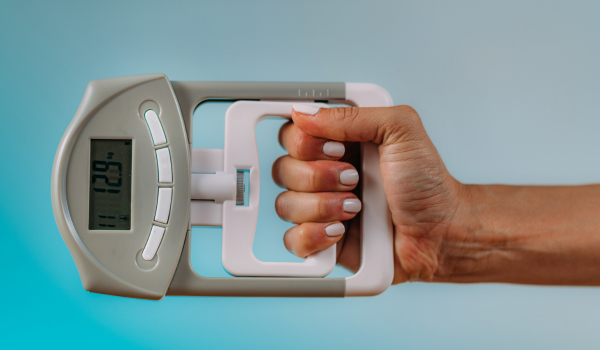
Healthcare professionals and researchers sometimes measure grip strength with a device called a hand dynamometer.
The device measures how much force you can produce when squeezing with your hand.
Because grip strength is relatively easy to measure, it is frequently used as one indicator of muscle function and physical capacity in older adults.
4. You Can't Hold Objects as Long as You Used To
Grip endurance is slightly different from maximum grip strength.
You might still be able to pick up something heavy but have difficulty holding it for an extended period.
For example, you might notice problems when:
-
Carrying a suitcase
-
Holding grocery bags
-
Gardening
-
Using household tools
-
Holding a heavy pan
-
Carrying a bucket
-
Exercising with dumbbells
Your hands may begin feeling tired, and you may need to put the object down sooner than you did in the past.
This can happen when the muscles responsible for maintaining your grip lose strength or endurance.
If this occurs consistently rather than after an unusually demanding activity, it may be worth paying more attention to your overall muscle strength.
Why Grip Strength Matters After 50
Grip strength isn't only about your hands.
It can provide useful information about overall muscle function because many activities that require grip strength also involve the arms, shoulders, back, and core.
Research has found associations between lower grip strength and several measures of health and physical function in older adults.
However, this doesn't mean having a weak grip directly causes these health problems.
Instead, grip strength may act partly as a marker of overall muscle mass, physical activity, nutrition, aging, and general health.
Maintaining your grip can also have immediate practical benefits.
Strong hands make it easier to:
-
Prepare meals
-
Carry groceries
-
Open containers
-
Perform household tasks
-
Exercise
-
Use tools
-
Maintain independence
This makes grip strength a useful component of healthy aging.
When Does Grip Strength Start Declining?
Grip strength doesn't suddenly disappear at a particular birthday.
Strength generally changes gradually and varies considerably from person to person.
However, muscle mass and strength tend to decline as people get older, and the changes may become more noticeable around middle age and beyond.
Several factors can influence how quickly this happens, including:
-
Physical activity
-
Resistance training
-
Nutrition
-
Chronic health conditions
-
Hormonal changes
-
Previous injuries
-
Joint health
-
Body composition
Someone who regularly strength trains may maintain considerably more muscle function than someone who becomes increasingly sedentary with age.
Age-Related Muscle Loss Can Affect Your Grip
One major reason grip strength can decline is sarcopenia—the progressive loss of muscle mass, strength, and physical function associated with aging.
Muscle loss can begin gradually in adulthood and become more significant later in life.
Your hands and forearms aren't necessarily the only muscles becoming weaker.
You may also notice changes in:
-
Leg strength
-
Walking speed
-
Balance
-
Ability to climb stairs
-
Ability to stand from a chair
-
Ability to lift or carry objects
This is one reason maintaining full-body muscle strength is important rather than focusing exclusively on hand exercises.
Arthritis Can Make Gripping More Difficult
Not every decline in grip strength comes directly from muscle loss.
Arthritis can also affect your ability to grip objects.
When joints in the fingers, thumbs, or wrists become painful or stiff, you may naturally avoid squeezing or gripping with maximum force.
Over time, reduced use can contribute to additional weakness.
Arthritis may also make certain movements particularly uncomfortable, including:
-
Twisting jar lids
-
Turning keys
-
Opening doors
-
Squeezing tools
-
Carrying bags
-
Pinching small objects
If pain is preventing you from using your hands normally, a healthcare professional or physical therapist can help identify exercises and modifications appropriate for your joints.
Inactivity Can Also Weaken Your Grip
Muscles generally adapt to how much they're used.
If your lifestyle becomes less physically demanding as you get older, your grip may receive less training than it did earlier in life.
For example, you may:
-
Retire from a physically active job
-
Exercise less frequently
-
Carry fewer heavy objects
-
Spend more time sitting
-
Avoid certain activities because of joint discomfort
Gradually becoming less active can contribute to losses in both grip and overall strength.
Fortunately, muscles can still respond to resistance training later in life.
How To Strengthen Your Grip After 50
One of the most effective strategies for maintaining grip strength is regular resistance training.
Rather than training only your hands, focus on exercises that require you to hold resistance while simultaneously strengthening larger muscle groups.
Examples include:
-
Dumbbell exercises
-
Kettlebell exercises
-
Deadlifts
-
Rows
-
Farmer's carries
-
Dead hangs
-
Pull-ups or assisted pull-ups
Simply holding dumbbells or kettlebells during exercises requires the muscles in your hands and forearms to work.
As your training progresses, your grip receives progressively greater resistance.
Try Farmer's Carries
Farmer's carries are a particularly practical grip exercise.
To perform one:
-
Hold a dumbbell or kettlebell in each hand.
-
Stand tall with your shoulders relaxed.
-
Keep your core engaged.
-
Walk slowly for a comfortable distance.
-
Put the weights down carefully.
-
Rest before repeating.
Start with weights you can control without losing posture.
As your strength improves, you can gradually increase the weight or the amount of time you carry it.
Dead Hangs Can Challenge Your Grip
If your shoulders tolerate the movement and you have access to a secure pull-up bar, dead hangs can provide another grip challenge.
Hold the bar and allow your body weight to create resistance.
Beginners don't necessarily need to support their entire body weight immediately.
You can keep your feet partially supported on the floor or another stable surface while gradually developing strength.
People with shoulder, elbow, wrist, or hand problems should get appropriate guidance before attempting hanging exercises.
Simple Grip Exercises You Can Do at Home
You don't necessarily need gym equipment to work your hands and forearms.
Simple options include:
-
Squeezing a soft exercise ball
-
Using resistance putty
-
Carrying household objects
-
Wringing out a towel
-
Holding moderately heavy objects for short periods
You can also practice functional tasks that require gripping and carrying.
However, grip exercises shouldn't completely replace full-body resistance training.
Building stronger arms, shoulders, back, core, and legs can provide broader benefits for healthy aging.
How Often Should You Strength Train?
Adults should generally include muscle-strengthening activities at least two days per week.
A well-rounded program should train the major muscle groups rather than focusing only on one area.
Depending on your fitness level, a workout might include movements such as:
-
Squats or sit-to-stands
-
Rows
-
Presses
-
Hip hinges
-
Carries
-
Step-ups
-
Core exercises
You don't need to start with heavy weights.
Learning proper technique and gradually increasing resistance is more important than immediately lifting as much as possible.
When Weak Grip May Be More Than Normal Aging
Gradual changes in strength can occur with aging, but sudden or unusual weakness deserves more attention.
Contact a healthcare professional if grip weakness develops suddenly or occurs alongside symptoms such as:
-
Numbness
-
Tingling
-
Significant hand or arm pain
-
Loss of coordination
-
Weakness predominantly on one side
-
Neck pain after an injury
-
Difficulty controlling your fingers
-
Frequently dropping objects
These symptoms may have causes unrelated to ordinary age-related muscle loss.
Grip weakness following a fall, head injury, or neck injury should also be medically evaluated.
The Bottom Line
Grip strength can gradually decline with age, and the changes may become more noticeable after 50.
Difficulty opening jars, carrying groceries, maintaining a firm handshake, or holding objects for extended periods are everyday clues that your grip may not be as strong as it once was.
Regular resistance training can help maintain hand, forearm, and overall muscle strength. Exercises involving dumbbells, kettlebells, carries, rows, deadlifts, and appropriate hanging movements naturally challenge your grip while strengthening the rest of your body.
Pay attention to changes that persist rather than occasional difficulty after a tiring day.
If weakness develops suddenly or comes with numbness, tingling, pain, coordination problems, or symptoms following an injury, speak with a healthcare professional to determine the cause.