.png)
If you’ve been on social media recently, you’ve likely seen plank challenges—people holding a forearm plank for as long as possible. While this trend can be motivating, experts emphasize that focusing only on duration can reduce the effectiveness of the exercise. Proper form and gradual progression are far more important.
So, how long should you actually be able to hold a plank? The answer depends on several factors, including your age, fitness level, and overall strength.
What Planks Can Do For You
4
Planks are one of the most effective exercises for strengthening your core. They engage multiple muscle groups at the same time, including the rectus abdominis (front of the abdomen), obliques (sides), and transverse abdominis (deep stabilizing muscles).
Unlike exercises such as crunches, which typically target a single area, planks train your entire core system. This makes them highly efficient and beneficial for overall strength.
core stability and posture
Planks teach your body how to properly brace and stabilize the core during movement. This is essential for protecting your lower back and maintaining proper alignment in daily activities, whether you’re lifting weights or doing routine tasks.
importance with age
As you get older, maintaining core strength becomes even more important. Strong core muscles support balance, spinal mobility, and reduce the risk of falls.
How Long Should You Be Able to Hold a Plank?
There’s no universal number that applies to everyone. Your plank time can vary based on body weight, proportions, fitness level, muscular endurance, and breathing control.
plank hold benchmarks by age
- Ages 18–39
- Average: 45–90+ seconds
- Fit individuals: 60–120 seconds
- Ages 40–59
- Average: 30–75 seconds
- Fit individuals: 45–90 seconds
- Ages 60+
- Average: 20–60 seconds
- Fit individuals: 30–75 seconds
While these ranges are helpful, they are only guidelines. Consistent training can slow or even offset age-related declines in strength and endurance.
How To Do a Plank
4
When performing a plank, technique matters more than how long you can hold it.
proper form basics
- Position your elbows directly under your shoulders
- Keep your spine neutral (avoid arching or sagging)
- Engage your core, glutes, and thighs
- Draw your ribs slightly downward
- Press firmly into the floor to stay stable
modifications for beginners
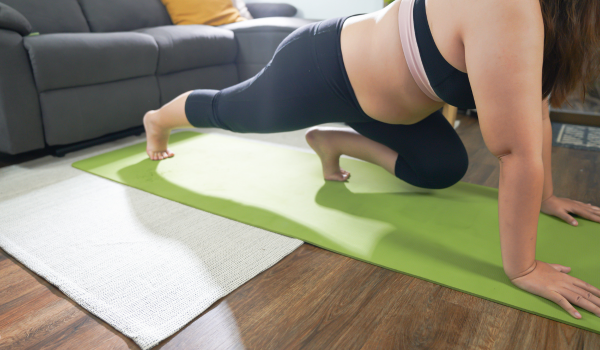
If you find the standard plank too difficult, you can:
- Drop your knees to the ground
- Elevate your hands on a step or bench
Common Plank Mistakes
poor core engagement
Failing to properly brace your core can cause your lower back to arch, increasing injury risk.
collapsed shoulders
Neglecting upper body engagement may lead to shoulder collapse and poor posture.
focusing on time over form
Holding a plank too long with improper form reduces effectiveness and can strain your body.
The key is to maintain full-body tension and stop as soon as your form begins to break.
How to Safely Prolong a Plank
Once you’ve mastered proper form, you can begin building endurance gradually.
progressive overload approach
- Start with 15–20 seconds
- Increase by 5–10 seconds over time
- Perform 2–3 sets per workout
- Train 2–3 times per week
supporting exercises
To improve your plank performance, include other core exercises such as:
- Side planks
- Bird dogs
- Dead bugs
- Suitcase carries
Adding movement variations, like shoulder taps, can also be more effective than simply holding a static plank for longer periods.
Final Thoughts
A longer plank doesn’t necessarily mean better fitness. High-quality holds with proper form deliver far greater benefits than pushing for extreme durations.
Focus on control, stability, and consistency. As long as your form remains strong, your plank training will be effective.

.png)




.png)





.png)





.png)

.png)