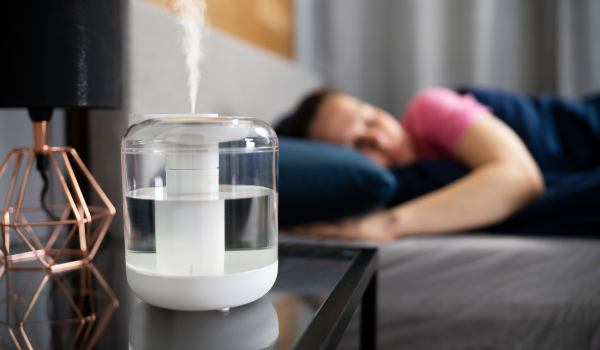
Humidifiers are commonly used during colder months when indoor heating can make the air uncomfortably dry. By adding moisture back into the air, these devices may help reduce dryness, improve breathing comfort, and support better sleep quality.
While a humidifier is not a cure for sleep problems, it can create a more comfortable sleeping environment, especially for people who struggle with dry air, congestion, or certain respiratory conditions.
How a Humidifier May Improve Sleep
The air you breathe while sleeping can have a significant impact on your comfort and overall sleep quality. When indoor air becomes too dry, it may irritate the nose, throat, and airways, making restful sleep more difficult.
Helps Keep Airways Moist
Your body naturally produces mucus that works alongside tiny hair-like structures in the nose to trap allergens, dust, and germs.
When the air becomes too dry, mucus can thicken and become less effective. This may contribute to:
- Nasal congestion
- Dry nose and throat
- Airway irritation
- Difficulty breathing comfortably
A humidifier adds moisture to the air, helping keep nasal passages and airways properly hydrated throughout the night.
Promotes Easier Breathing
Humidified air can reduce airway resistance and make breathing feel smoother and more comfortable.
When airways are dry and irritated, airflow may feel restricted, leading to discomfort during sleep. Adequate humidity helps reduce this irritation and supports more natural breathing patterns.
May Improve Sleep Comfort During Illness
Many people find humidifiers particularly helpful when dealing with:
- Common colds
- Sinus congestion
- Seasonal allergies
- Dry coughs
Added moisture may soothe irritated airways and make it easier to sleep while recovering from respiratory symptoms.
Can Benefit Certain Sleep-Related Conditions
People with certain respiratory conditions may experience additional comfort from using a humidifier.
These conditions may include:
- Asthma
- Obstructive sleep apnea
- Chronic nasal dryness
Research has suggested that humidifiers may help reduce dryness in the mouth and throat, particularly among individuals who experience airway-related sleep disturbances.
Choosing the Right Humidifier
Not all humidifiers work the same way. Selecting the right model can improve effectiveness and make maintenance easier.
Consider Room Size
Choose a humidifier that matches the size of your bedroom.
A unit that is too small may not provide enough moisture, while one that is too large can increase humidity beyond recommended levels.
Look for Consistent Humidity Control
Many experts recommend maintaining indoor humidity levels between 40% and 60%.
Humidifiers with built-in humidity sensors can help maintain comfortable moisture levels without over-humidifying the room.
Choose a Suitable Capacity
If you plan to run the humidifier overnight, consider a model with a larger water tank.
Larger-capacity units can operate throughout the night without requiring frequent refills.
Best Practices for Using a Humidifier at Night
Using a humidifier correctly is important for both effectiveness and safety.
Use Distilled or Deionized Water
Distilled or deionized water contains fewer minerals than tap water.
This can help reduce mineral buildup inside the machine and prevent the release of fine particles into the air.
Place It in a Well-Ventilated Area
Position the humidifier where air can circulate freely around the room.
Proper airflow helps distribute moisture more evenly and prevents excessive humidity from accumulating in one area.
Monitor Humidity Levels
Too much humidity can create its own problems, including mold growth and dust mite proliferation.
A hygrometer can help monitor indoor humidity and keep levels within the recommended range.
Why Cleaning Your Humidifier Matters
One of the most important aspects of humidifier use is regular cleaning.
Without proper maintenance, humidifiers can become breeding grounds for:
- Mold
- Bacteria
- Fungi
These contaminants may then be released into the air and potentially worsen respiratory symptoms.
Clean It Regularly
While cleaning recommendations vary by manufacturer and model, a good general rule is to clean the humidifier at least twice per week.
Always follow the manufacturer's instructions for proper maintenance and disinfection.
Potential Drawbacks of Overusing a Humidifier
Although humidifiers can be beneficial, excessive humidity may create problems.
Over-humidified rooms can contribute to:
- Mold growth
- Dust mites
- Musty odors
- Increased allergy symptoms
Maintaining balanced humidity levels is essential for achieving the benefits without creating new health concerns.
The Bottom Line
Using a humidifier nightly may improve sleep quality by adding moisture to dry indoor air, helping keep airways hydrated and making breathing more comfortable. It can be especially beneficial for people dealing with nasal dryness, congestion, asthma, colds, or sleep-related breathing issues.
To get the most benefit, choose a properly sized humidifier, use distilled water, maintain indoor humidity between 40% and 60%, and clean the device regularly. When used correctly, a humidifier can be a simple tool for creating a more comfortable and sleep-friendly bedroom environment.



.png)