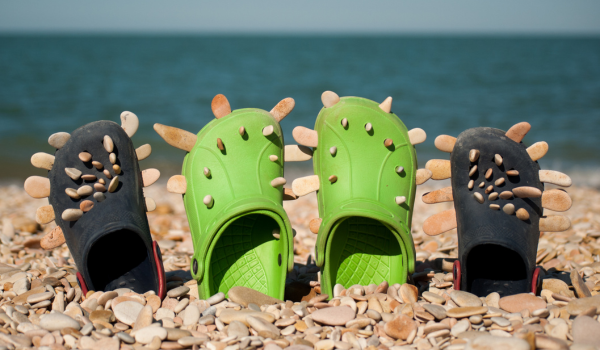
Crocs have become one of the most popular casual shoes, especially during warmer months. Known for their lightweight foam design and easy slip-on style, they are widely worn by both adults and children.
While Crocs offer certain comfort benefits, they may not always provide the support needed for long-term foot health. Whether they are a good choice depends on how and when you use them.
Crocs Can Be Good For Your Feet
Crocs provide several features that can make them comfortable for short-term use.
Soft Cushioning And Shock Absorption
The foam material helps absorb impact and reduce pressure on the soles of the feet. This can make Crocs more comfortable than very thin sandals or flat flip-flops.
Lightweight And Easy To Wear
Crocs are simple to slip on and off, making them convenient for everyday use, quick errands, or recovery after long periods of standing.
Wide Toe Box
The roomy design allows toes to spread naturally instead of being compressed. This may be helpful for people with bunions, hammertoes, or foot swelling.
Good Ventilation
The holes in the upper part of the shoe allow airflow, helping keep feet cool and comfortable in warm weather.
But They Also Have Downsides
Despite their comfort, Crocs have limitations that may affect foot health if worn too often.
Limited Support And Stability
Crocs lack the structure of athletic shoes. Their flexible design means the foot muscles must work harder to maintain balance and stability.
Open Heel Design
The back of the shoe is not fully secure, which can cause the foot to slide. This may lead to fatigue, strain, or discomfort during extended use.
Not Ideal For Certain Foot Conditions
People with flat feet, plantar fasciitis, tendon issues, or balance problems may find Crocs less supportive and potentially uncomfortable.
Wear And Tear Over Time
The foam cushioning can break down with regular use, reducing support and increasing the risk of discomfort or injury.
What About Crocs For Children?
Crocs are a popular choice for kids because they are easy to wear and maintain. They also provide some benefits for growing feet.
Comfort And Flexibility
The soft material reduces pressure on the feet, while the wide toe area allows natural movement.
Convenience For Daily Use
Children can easily put them on and take them off without assistance, making them practical for casual activities.
However, there are also concerns to consider.
Reduced Stability During Activity
Crocs do not provide the same level of support and grip as sneakers. Children who run or play actively may be more likely to slip or trip.
Not Suitable For Sports Or Intense Activity
Structured shoes are better for school, sports, and prolonged physical activity.
Possible Skin Irritation
The material may trap moisture, which can lead to blisters or irritation, especially in hot weather.
Tips For Wearing Crocs Safely
Crocs can be part of a comfortable footwear routine if used appropriately.
Limit Long-Term Use
They are best for short periods rather than all-day wear.
Use For Casual Activities
Crocs are suitable for light activities such as walking short distances, relaxing at home, or spending time outdoors.
Secure The Heel Strap
Using the back strap can help keep the shoe in place and reduce slipping, especially for children.
Replace Worn-Out Shoes
Over time, Crocs may lose their shape and support. Replacing them when they show signs of wear can help prevent discomfort or injury.
Final Thoughts
Crocs can be a comfortable and practical footwear option when used in the right situations. However, they are not designed to replace supportive shoes for extended walking, exercise, or high-impact activities.
Choosing when to wear Crocs—and when to switch to more supportive footwear—can help protect your foot health over time.
Was this page helpful?


.png)




.png)

.png)